Land your first full-time engineering role at a company you actually want to work for.
My goal is simple: I want to help you land a great engineering role that gets you excited — one you're proud to tell your friends and family about. Here are the three things I'm going to help you do to get there:
I've coached engineers into landing offers from top tier companies — including but not limited to Google, SpaceX, GE, and Ford. Some have landed multiple offers from Fortune 100 companies at the same time. When I started working with them, it was clear they were good engineers with solid technical knowledge and real experience. What they weren't good at was communicating, packaging, and presenting the value and impact they were capable of delivering — to a hiring manager or recruiting team who had three seconds to decide whether to keep reading. Together, we transformed them into exceptional candidates whose capabilities on paper finally matched their capabilities in reality.
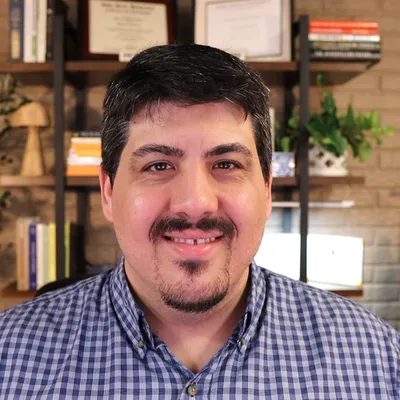
I've never been a full-time recruiter. I've never been an HR person. I am an engineer — just like you. The difference is: I've cracked the system. And I can share it with you.
My first major engineering role was at John Deere. Over 8 years there, I worked my way up from entry-level engineer to junior engineer, Scrum Master, Product Owner, senior engineer, staff engineer, engineering manager, and finally an organization-wide strategic AI and efficiency leadership role. In that time, I made four major domain and role-type pivots — including mechanical engineering to embedded software, and individual contributor to manager — and earned four promotions. In every single role, I was either conducting interviews, sitting on hiring panels, hiring for my own team, or attending career fairs to recruit engineers for Deere.
I've read more resumes than I can count. I've seen which ones stand out from the stack and which ones get passed over. I've been in the interview panel debrief rooms where candidates' performances get discussed and ranked. I've conducted countless interviews and witnessed firsthand what works and what doesn't. I've seen time and time again who gets the offer and who doesn't — and why. This knowledge isn't theoretical. It's not based on what I think might be the case. It's based on what has actually happened, and what I have witnessed directly on the engineering side of a top-tier company.
Look — I don't have some stellar backstory. I grew up in the Midwest. Went to a state school. Didn't graduate with a super high GPA. I didn't have a powerful network before getting hired at Deere. I remember sending out hundreds of applications only to hear crickets back. Through all of it, I cracked the code. And if I can do it with that background, so can you. I can show you how.
One of the first things I'd tell you — whether you apply to work with me or not — is this: change your mindset. You are not a beggar seeking charity from some company benevolent enough to give you a handout. You are a capable, smart engineer with real technical knowledge, and you bring unique experiences, talents, and genuine value and impact to any organization willing to give you a shot. You just need to communicate that value more effectively and have a consistent system and strategy to land the opportunity. That is the canvas on which we will build the beginning of your new journey together.
Because I can only take on 10 clients per month, I need to do some work up front to make sure we're a good fit for each other. And if we're not, no hard feelings — I'll try to point you in the right direction to get help, even if it's not from me.
This won't work for you if you...
- ✕Haven't applied for any jobs yet and don't have a serious resume put together
- ✕Are expecting a coach to do all the work for you and hand it over
- ✕Have worked with other career coaches and the pattern is that "they were always the problem"
- ✕Are convinced your resume is already strong and your interview examples and performance have no room to improve
But if you...
- ✓Have graduated with an engineering degree
- ✓Have been struggling to land interviews, or you're landing interviews and not getting offers extended to you
- ✓Have already put in real effort on your resume and interview prep and it's still not producing results
- ✓Take direction well and can follow a solid plan
- ✓Are committed to doing meaningful work between sessions — not just showing up to the calls
- ✓Recognize that you need a better system, not just more applications
- ✓Take personal responsibility for your results based on the effort you put in
- ✓Are frustrated by the constant apply-and-reject cycle and ready to do something different about it
...this program could be the big unlock you've been searching for to help you land that next engineering role.
Here's what we're going to do together.
The Resume Rebuild
Before Session 1, you'll receive a full scored audit of your current resume using the Impact Bullet Builder™ framework — 8 criteria, each scored individually, so you walk into the session already knowing exactly where the problems are. Then we get to work.
Session 1 is a live, 1-on-1 working session. We roll our sleeves up and rebuild your resume bullets together in real time — applying the IBB framework, the Hidden Metrics Finder™, and the Me-in-We Extractor™ to reconstruct each bullet so it communicates maximum impact and value from your actual experiences. Not generic, not templated. Your specific projects, your specific contributions, rewritten to convince anyone who glances at that resume that you are the kind of engineer who delivers results.
Previous clients have consistently called this session the single most valuable hour of the program. The depth of the live rebuild — going through each bullet together and understanding precisely why each word matters — is where the shift happens. By the end, you have a resume that reflects your real value, not just your job history.
And here's my promise on Session 1: if we finish it and you don't feel it was worth every penny, we stop there. No obligation to continue, no awkward conversation. You keep everything we built.
The Story Vault
Most engineers struggle to answer behavioral interview questions not because they lack good experiences — but because they don't understand what a hiring team is actually assessing. They don't know which stories matter, what details to include, how to frame them, or what makes one example land and another fall flat. Session 2 fixes that at the root.
We start with competencies — the specific qualities engineering hiring teams are evaluating in every behavioral question they ask. Once you understand what they're looking for underneath the surface question, the way you select and build your examples changes entirely. I'll walk you through the Competency Story Map™, the High-Impact Story Framework™, and the 3-Tier Impact Ladder™ — the tools that transform a vague "I worked on a project" into a specific, credible, compelling example that makes a panel sit up and take notes.
Then we do it live. We take two or three of your real experiences and go through them in depth together — drilling down into the details that actually matter, surfacing the impact that's buried in how you're currently telling the story, and rebuilding each one using the frameworks. This is a workshop-style working session: raw, collaborative, sleeves rolled up. You leave knowing exactly how to craft every remaining story on your own. My recommendation is 10–15 fully built examples ready before you interview. The knowledge and the process transfer in this session — that's the point.
The Interview Strategy
Sessions 1 and 2 cover preparation. Session 3 is about performance. This is the strategy session — what you actually do and say from the moment you walk in to the moment you send the follow-up, and why each piece of it matters.
We cover the full arc of the interview. How to open with a strong, structured introduction that immediately positions you as a serious candidate. How to answer behavioral questions using the STAR+2 format — going beyond the standard Situation-Task-Action-Result to deliver answers that signal leadership, learning, and impact. How to use the Power Pause — a deliberate technique for buying yourself thinking time without looking uncertain, and the wrap-around close after each answer ("Does that answer your question, or would you like me to go deeper?") that keeps you in control of the conversation. How to manage your time so answers are thorough without running long. How to bring a prepared reference — the Interview Cheat Sheet™ and the Visual Aid Binder™ — into the room professionally and use it to your advantage.
Then the outro: how to ask questions at the end of the interview that demonstrate strategic thinking and leave a strong final impression. How to mention any dealbreakers before you leave. How to close the conversation with confidence. And what to send in your thank-you email within 24 hours of the interview and why that window matters.
Everything in this session is designed around one question: how do we plant seeds in the panel's mind — from the first handshake to the final email — that you are the right candidate? That's the strategy. We practice it in Session 4.
The Live Mock Interview
Session 4 is where everything comes together under real conditions. We run a full behavioral mock interview — introduction, behavioral questions drawn from the competency map we built in Session 2, and the outro. But this isn't just a dry run. After each section, we stop and rip it apart.
I'll give you detailed, direct, specific feedback on exactly what worked and what didn't — how you opened, how you structured your answers, what details you included or missed, where your delivery was strong and where it lost clarity. We'll adjust in real time and in some cases run the same question again until it's sharp. This is another sleeves-rolled-up working session, and the feedback is thorough. Nothing is glossed over. The goal is to walk out of this session with a clear picture of precisely how to perform at your best when the real interview happens.
This is also the session to bring your "should I do this or that?" questions — things you've been unsure about throughout the process. We work through them live with real reasoning, not generic advice.
All four sessions are recorded. You receive the video, audio, and full transcript of every session for your reference. Everything we build together stays with you.
There are two paths, depending on where you are and what you need.
- Session 1: Resume audit + live rebuild
- Session 2: Competency mapping + story building workshop
- Session 3: Full interview strategy session
- Session 4: Live mock interview + detailed debrief
- All sessions recorded — video, audio, transcript
- Pre-session resume audit delivered before Session 1
- Available after completing the 1-Month Program
- Cancel anytime — no long-term commitment
- Application strategy and pipeline reviews
- Continued behavioral interview practice
- Career path and company selection guidance
- LinkedIn positioning and network building
- Offer evaluation and negotiation support
- I walk with you until you land the role
Most clients complete the 1-Month Program and start actively interviewing. Continued Coaching is for those who want a consistent coaching relationship — someone in their corner at every step until the offer is signed. Basic math either way: every month without an engineering offer costs roughly $6,000–$8,000 in lost income based on BLS entry-level engineering salary averages. The program pays for itself in about the first week on the job.
You don't risk anything to get started.
When you submit your application, a $249 deposit is required to hold your spot. If I review your application and don't think I can genuinely help you, that deposit is returned immediately — no questions, no delay.
If you're approved and we run Session 1 together: if you aren't completely satisfied with the results of that session, the $249 is returned in full. No questions asked. You'll still walk away with a fully overhauled resume — you lose nothing financially.
If Session 1 delivers — and based on every client I've worked with, it will — we continue through Sessions 2, 3, and 4. Payment for each session is due before that session begins. After the 4-session program, you decide: stop there, or move into Continued Coaching Support at $495/month.
There is no pressure, no lock-in, and no hard sell at any point. Every decision is yours.
I take on a maximum of 10 new clients per month. That cap is intentional. Every session is live and 1-on-1, and to keep the quality of each one high, I can't take on more than that. It also means I review every application personally before approving it — I want to make sure I can genuinely help you before we start. If I don't think I can, I'll tell you straight and return your deposit immediately.
If you're considering the July cohort, applying sooner rather than later is the right move.
Apply for the July Cohort
If this sounds like the right fit, here's how to get started.
- 1 Fill out a short application. It takes about 5 minutes. A $249 deposit is required to hold your spot — fully refunded if I don't approve your application, or if Session 1 doesn't deliver.
- 2 I'll review it within 48 hours. If it looks like a fit, I'll reach out to get you scheduled. If it isn't, I'll tell you exactly why and refund your deposit immediately.
Hope to hear from you.
- A copy of the Impact Bullet Builder™ framework — so if you're the kind of person who wants a head start, you can review it before Session 1 and hit the ground running from minute one.
- Access to the IBB Bullet Audit Tool — run a few of your current resume bullets through it and start seeing what the transformation can look like before we've even met.
- Access to the Launch to Lead Skool community — connect with others who have been in your exact shoes, or still are, and become part of a community that supports you throughout your journey to that first great engineering role.
- Your Pre-Session 1 materials — including the Job Sourcing Strategy™, the Application Pipeline™, the Asset Mindset Shift™, and others to start building momentum in the areas of job sourcing, networking, and how you show up as a candidate — before Session 1 even begins.
Individual results described on this page are not typical and do not constitute a guarantee of your results. Every candidate's situation is different. Outcomes depend on effort, market conditions, and factors outside of coaching. Karen B., Sarah K., and other client stories are shared for informational purposes only and reflect individual experiences.